
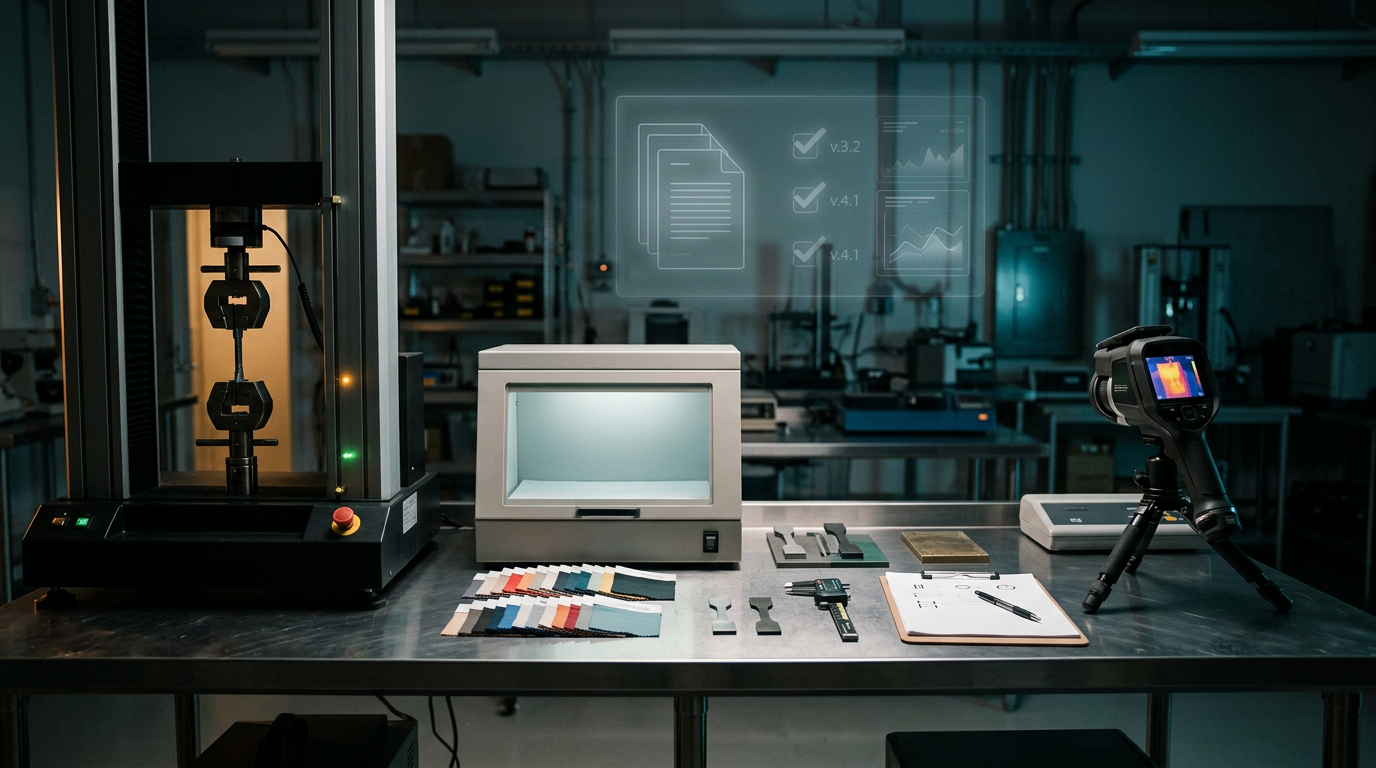
Through 2025-2026, several testing sectors enter a synchronized standards-upgrade cycle — NFPA 70B moves from recommended to mandatory, ISO / EN families enter a new revision wave, and a batch of Chinese GB standards are rolling into new editions.
Meanwhile, the desktop analyzers serving those standards — the software bundled with thermal cameras, with tensile testers, with various lab instruments — are mostly decade-old product shapes or older. They share two traits: tied to hardware, and not evolving.
For an independent software team, this is a clear window. The logic is simple: once a standard revises, the templates and flows bundled with the instrument vendor fall behind, and inspectors have to go find a tool that keeps up.
The replacement pattern we see is very consistent. Step one, users adopt our tool as a patch just to produce reports in the new format. Step two, they realize the new tool doesn't just output new reports — it speeds up the whole workflow by several times. Step three, the entire workflow migrates over, and the original vendor software quietly degrades to just a data-capture utility.
Catching this window relies on two things: keeping up with the standards, and staying hardware-agnostic. Neither is something instrument-vendor software does well — and both are things an independent team is naturally good at.